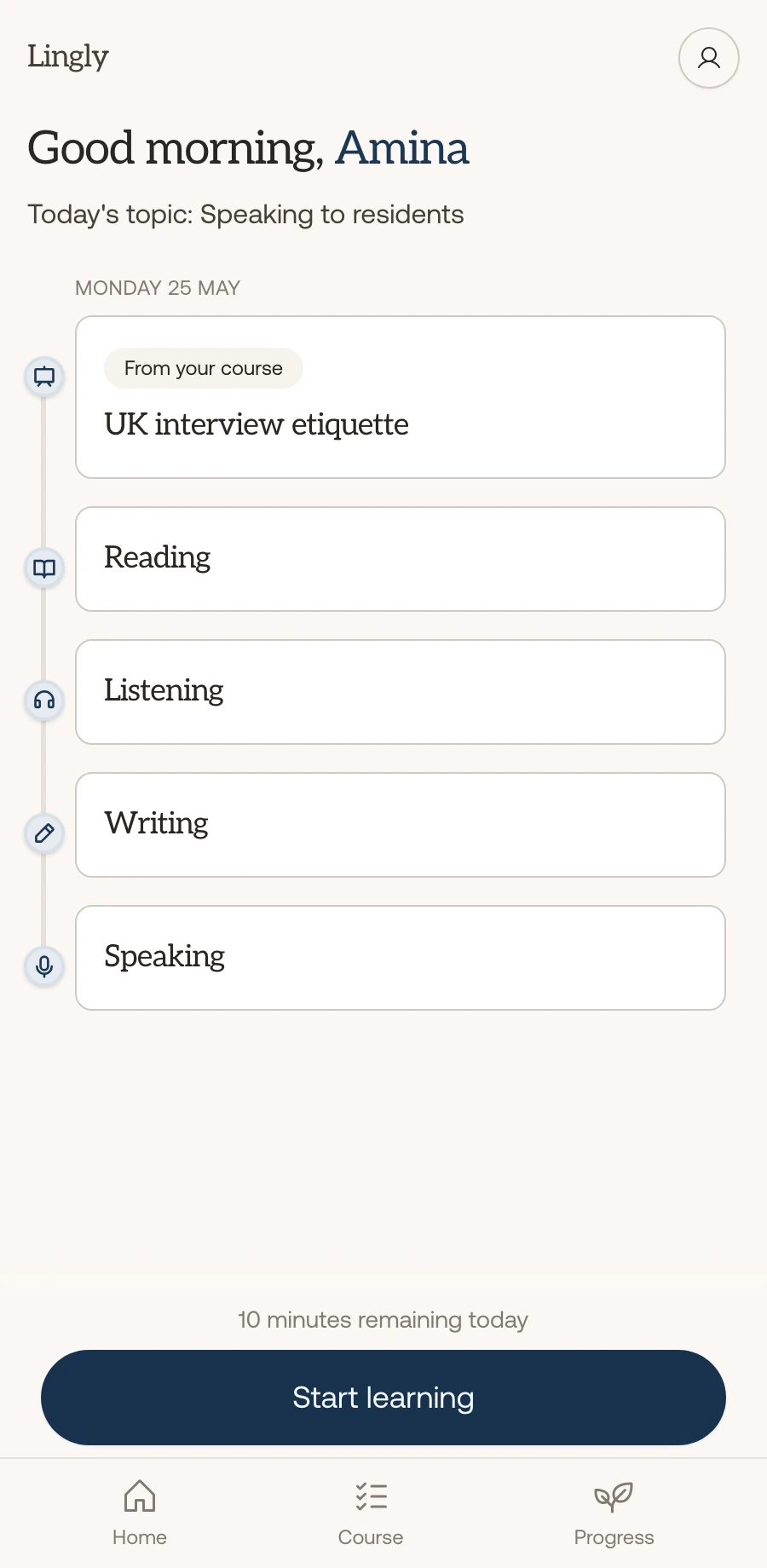
Role-specific training course
Lingly turns your workplace language, customer scenarios, policies, and role expectations into a focused course.
Lingly helps employers give staff practical English training for customer conversations, complaints, team updates, safety language, and workplace confidence.
When staff do not have enough practical English for the situations they face every day, the cost shows up in manager time, customer experience, and progression.
01
Small misunderstandings can turn into repeated questions, slower service, missed details, or avoidable frustration.
02
Supervisors spend time rephrasing instructions, checking messages, handling escalations, and filling confidence gaps.
03
People with strong work ethic and role knowledge can still be held back from more responsibility because English is the blocker.
04
Classroom English rarely gives enough practice with complaints, service language, safety phrases, handovers, or product explanations.
Lingly gives staff role-specific English practice and gives managers evidence before changing responsibilities, shifts, or progression plans.
Lingly turns your workplace language, customer scenarios, policies, and role expectations into a focused course.
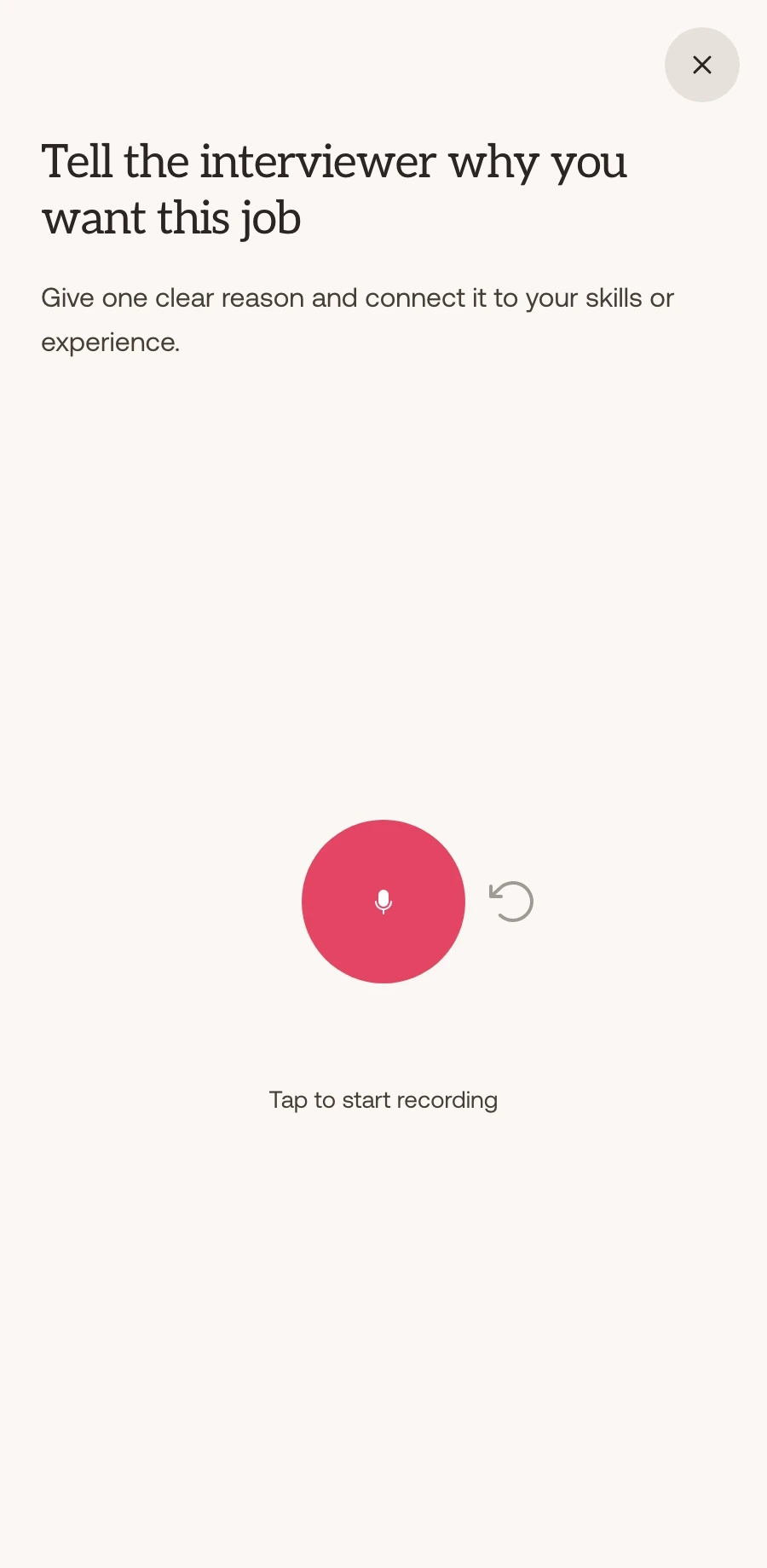
Staff record answers, practise real conversations, and repeat tasks until they can respond more clearly.
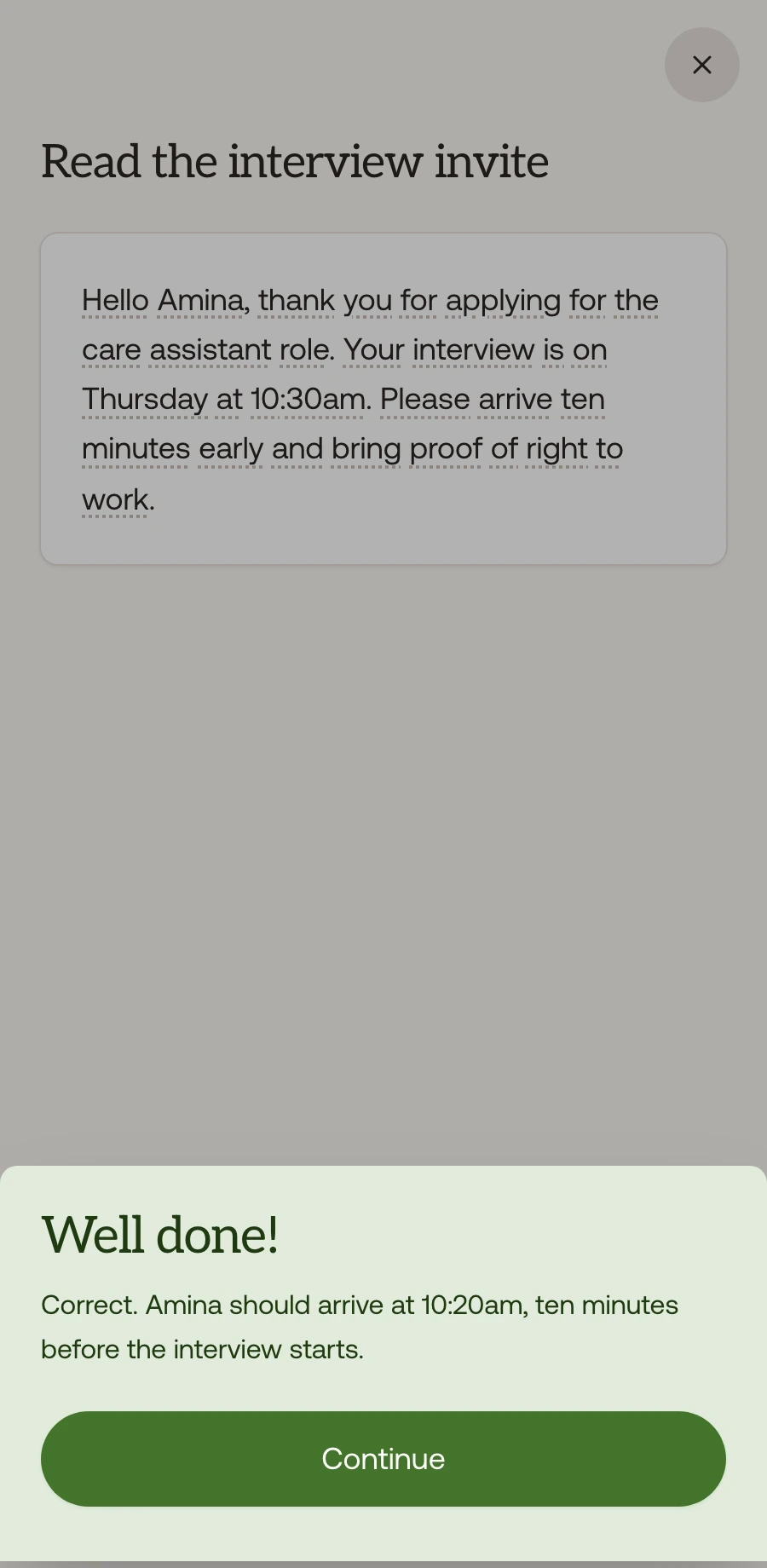
Lingly gives feedback on clarity, tone, vocabulary, and whether the answer fits the workplace situation.
 English (UK)
  Shqip
Shqip  العربية
  اردو
اردو  Español
  Français
  Polski
  Română English (UK) Shqip العربية اردو Español Français Polski Română
  हिन्दी
  Italiano
  日本語
日本語  한국어
한국어  Português
  Türkçe
  Українська
  Tiếng Việt हिन्दी Italiano 日本語 한국어 Português Türkçe Українська Tiếng Việt
 Translations and explanations help learners understand workplace English without getting stuck on instructions.
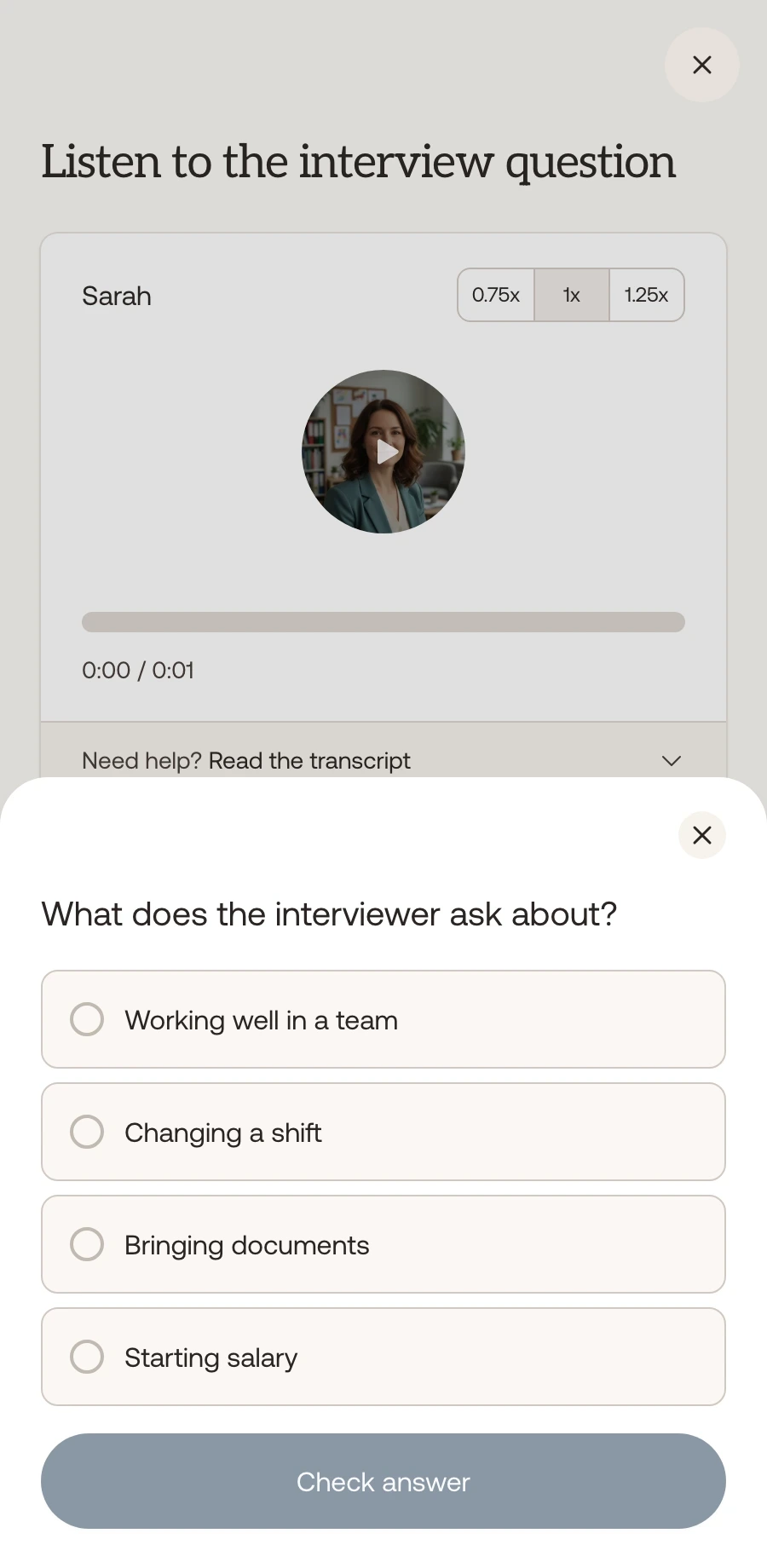
Learners practise accents, instructions, informal phrasing, and checks they are likely to hear during shifts.
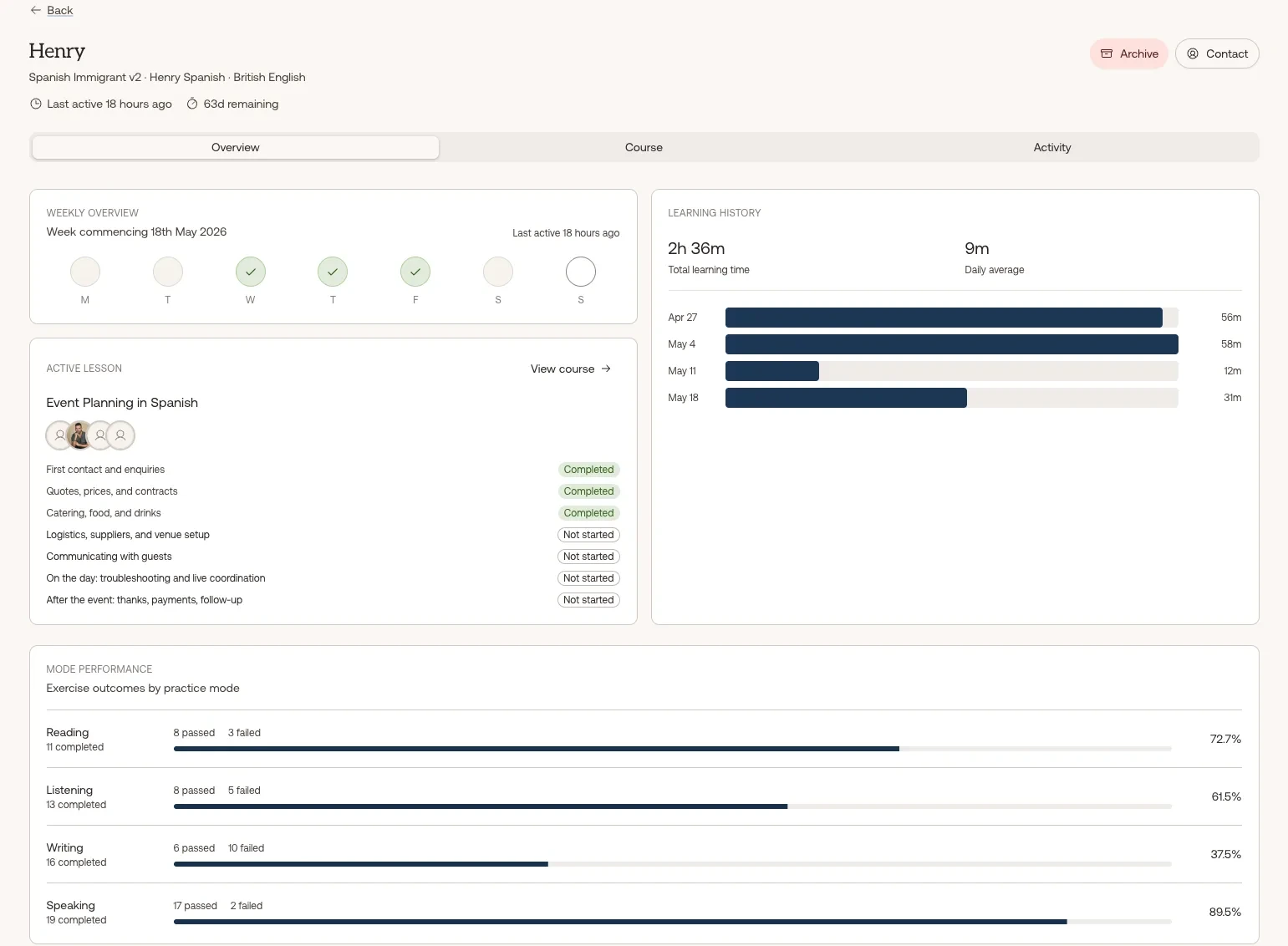
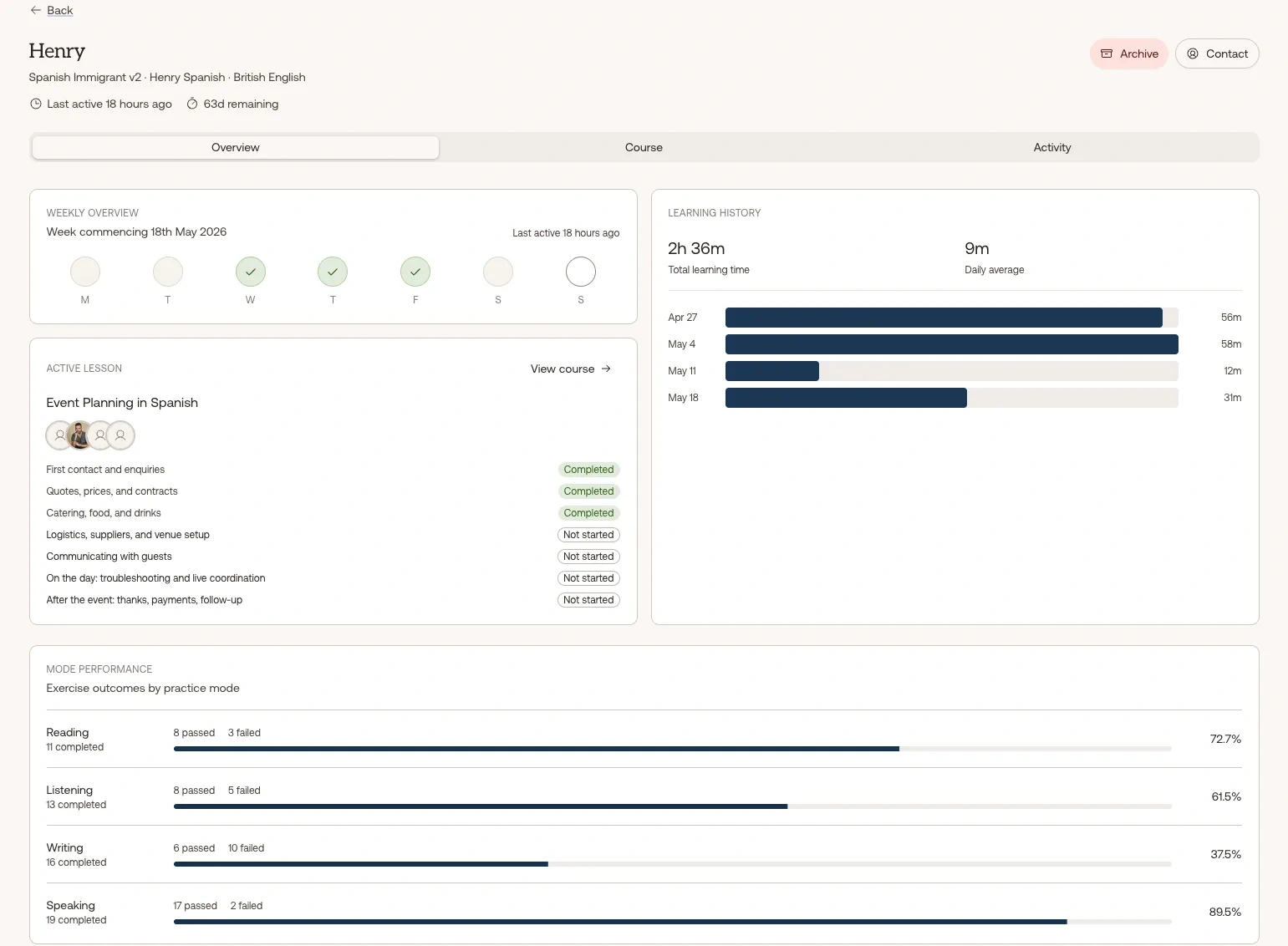
Managers can see starts, activity, course progress, and learner evidence before deciding the next step.
The course is built around the moments that decide whether staff can communicate clearly and confidently at work.
Customer conversations
Greeting people, answering simple questions, explaining options, and checking understanding.
Team and supervisor updates
Listening for instructions, shift changes, priorities, task details, and manager feedback.
Messages and records
Writing short updates, handover notes, absence messages, incident notes, and simple workplace records.
Difficult conversations
Handling complaints, explaining delays, apologising clearly, and staying professional under pressure.
Safety and escalation
Reporting a concern, explaining what happened, following procedures, and asking for urgent support.
Workplace tone
Using polite requests, professional phrasing, indirect language, and sector-specific vocabulary.
Lingly is already used by learners and managers who need practical English for real work, not generic classroom language.
In five weeks, one learner practised far more than they would have in a weekly class and no longer needed Google Translate in support sessions.

Ryan Clayton
Manager
Lingly helped me see my mistakes, proofread properly, and write in a more professional way.

Felicia
Learner
Other employers told me to build my confidence, but they did not show me how. This was the first practical training I had received.

Michael
Learner
Lingly helped me use the right workplace language, explain myself more clearly, and choose better words in difficult conversations.

Dumi
Learner
Lingly's AI picked up on things I had not noticed. It showed where the wording was off, so I could talk the learner through a better way to say it.

Ruth
Manager
It helped me learn how to interact with other people and practise the language I need in real conversations.

Biju
Learner
Start with a staff group where communication is holding back confidence, service, or progression, then review evidence before the next step.
Step 1
Select staff whose role performance, customer confidence, written updates, or progression is being limited by English.
Step 2
Lingly turns your workplace scenarios, policies, customer language, and role expectations into a focused English course.
Step 3
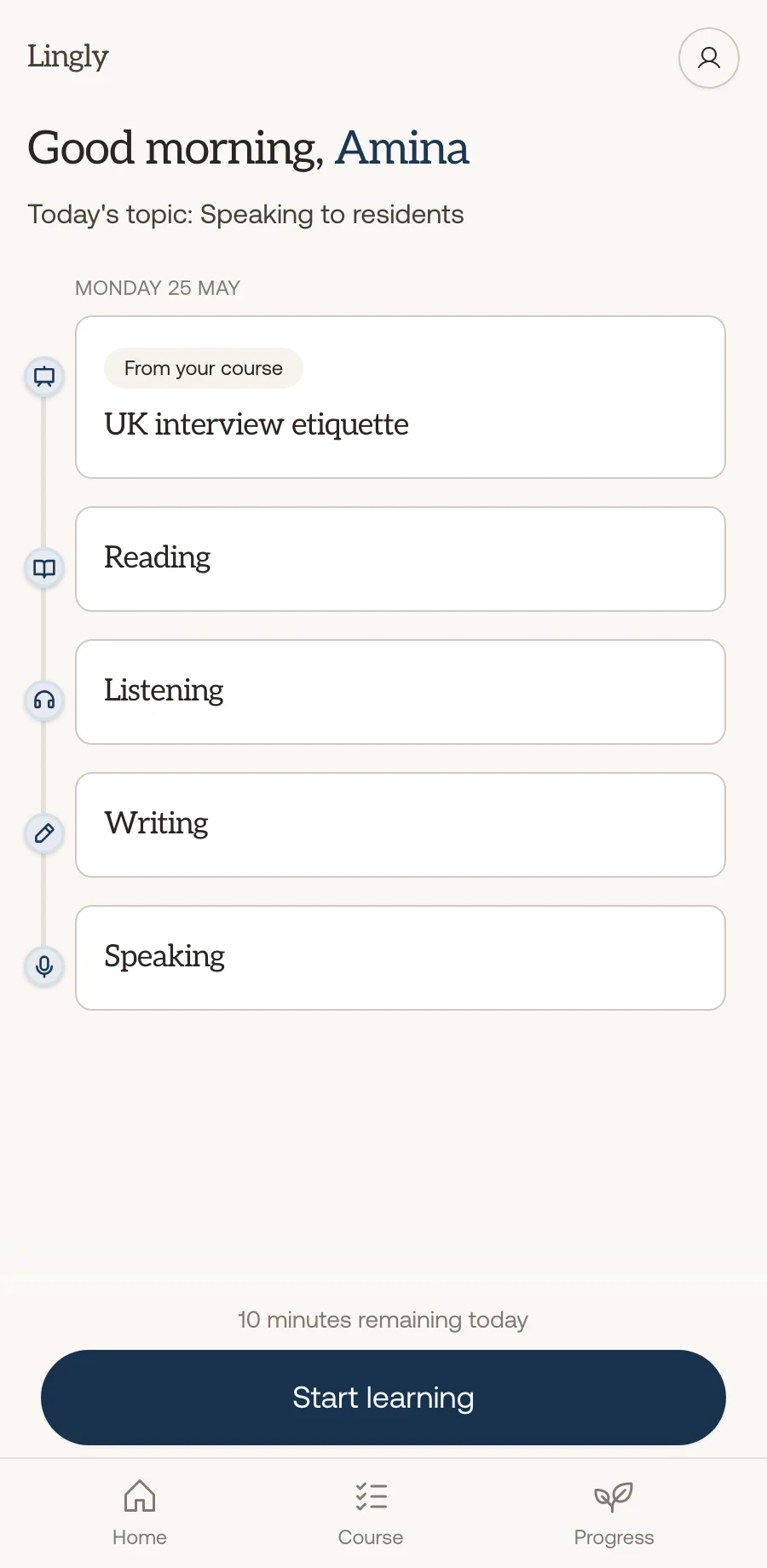
Staff practise on a phone, tablet, or laptop in short sessions around shifts, breaks, and home life.
Step 4
Managers review activity, confidence, and learner evidence before changing responsibilities, shifts, or support plans.
Start with one candidate group, then add learners when you are ready. Each licence includes the course, dashboard, tracking, and support.
£99
per learner per quarter
Volume discounts and PO-based purchasing available
Start with staff who are good at the role but are held back by spoken English, listening confidence, written updates, customer conversations, or workplace vocabulary.
No. Lingly is a workplace English layer around your existing training, policies, and role expectations.
Yes. The course can include your customer situations, role expectations, policies, product language, handover notes, safety phrases, and workplace tone.
Most teams set a rhythm of 10 to 20 minutes a day. Learners can practise on a phone, tablet, or laptop, so training can fit around shifts and home life.
Managers can see who has started, who is active, daily average practice, course progress, and learner activity. The dashboard helps teams review progress with evidence.
Yes. You can start with one site, one role group, or one team before a wider rollout.
Talk to Lingly about the teams where English is limiting service, confidence, or progression.