A course built for your organisation
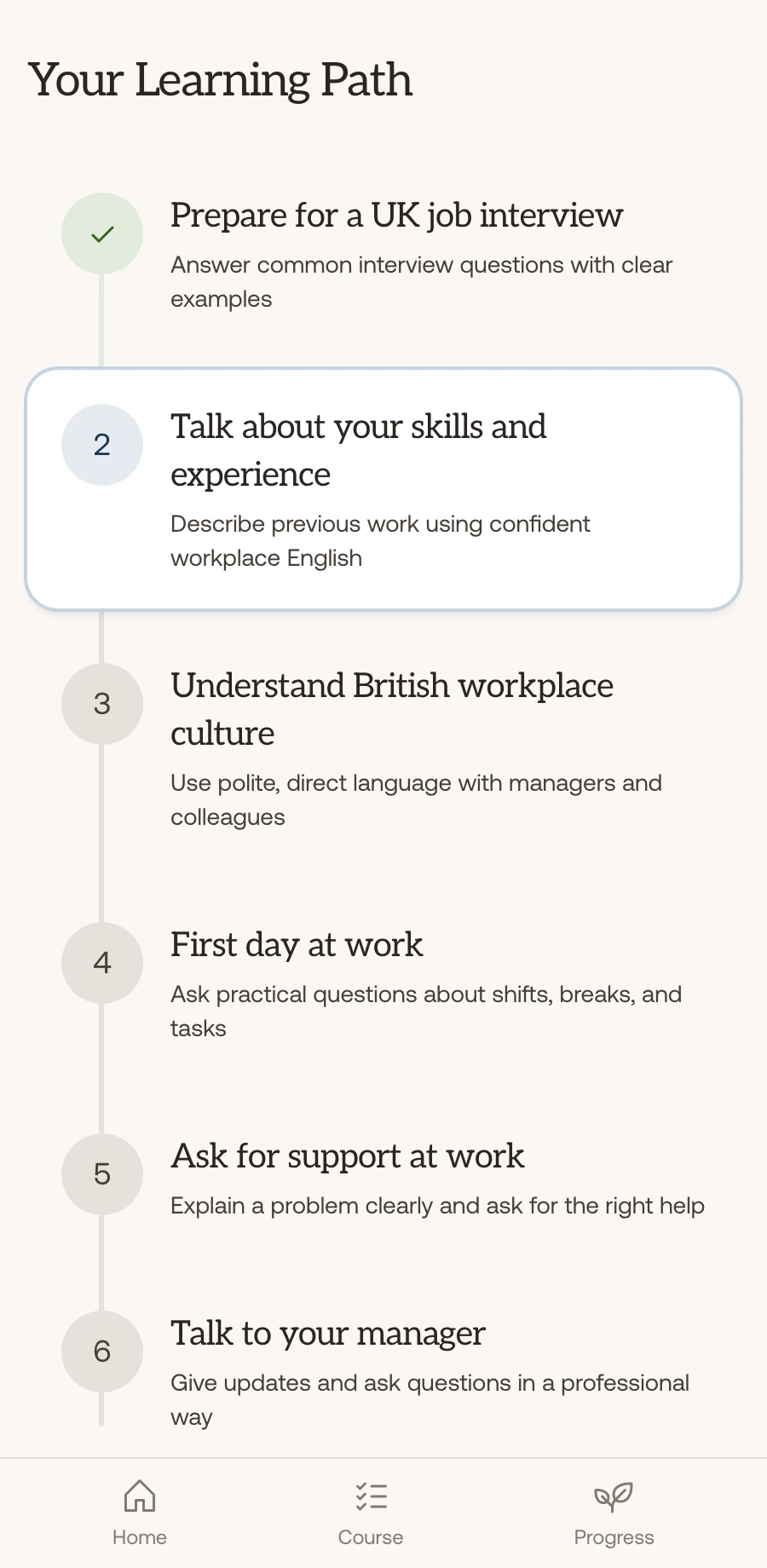
Lingly turns your roles, vocabulary, procedures, and common conversations into a workplace English course for your staff.
Lingly builds role-specific English courses for call centre teams, so agents can practise calls, customer questions, accents, complaints, scripts, and clear explanations under time pressure.
Language apps, classes, and translation tools can all help. The gap is that staff still need daily practice with the words, accents, instructions, and conversations they meet in call centres work.
01
They can help with general vocabulary, but they do not prepare staff for shift instructions, customer questions, workplace tone, or safety language.
02
They can help motivated learners, but fixed times, travel, and generic course content make them hard to run across a working team.
03
They can solve a sentence in the moment, but they do not build listening confidence, spoken fluency, or judgement in live workplace conversations.
04
It keeps the shift moving, but it adds manager workload and leaves the same communication gap in place for the next shift.
Lingly helps frontline teams practise the English they need at work. We build training around your roles, materials, and real conversations, then give managers a simple way to track progress.
See our approach Lingly turns your roles, vocabulary, procedures, and common conversations into a workplace English course for your staff.
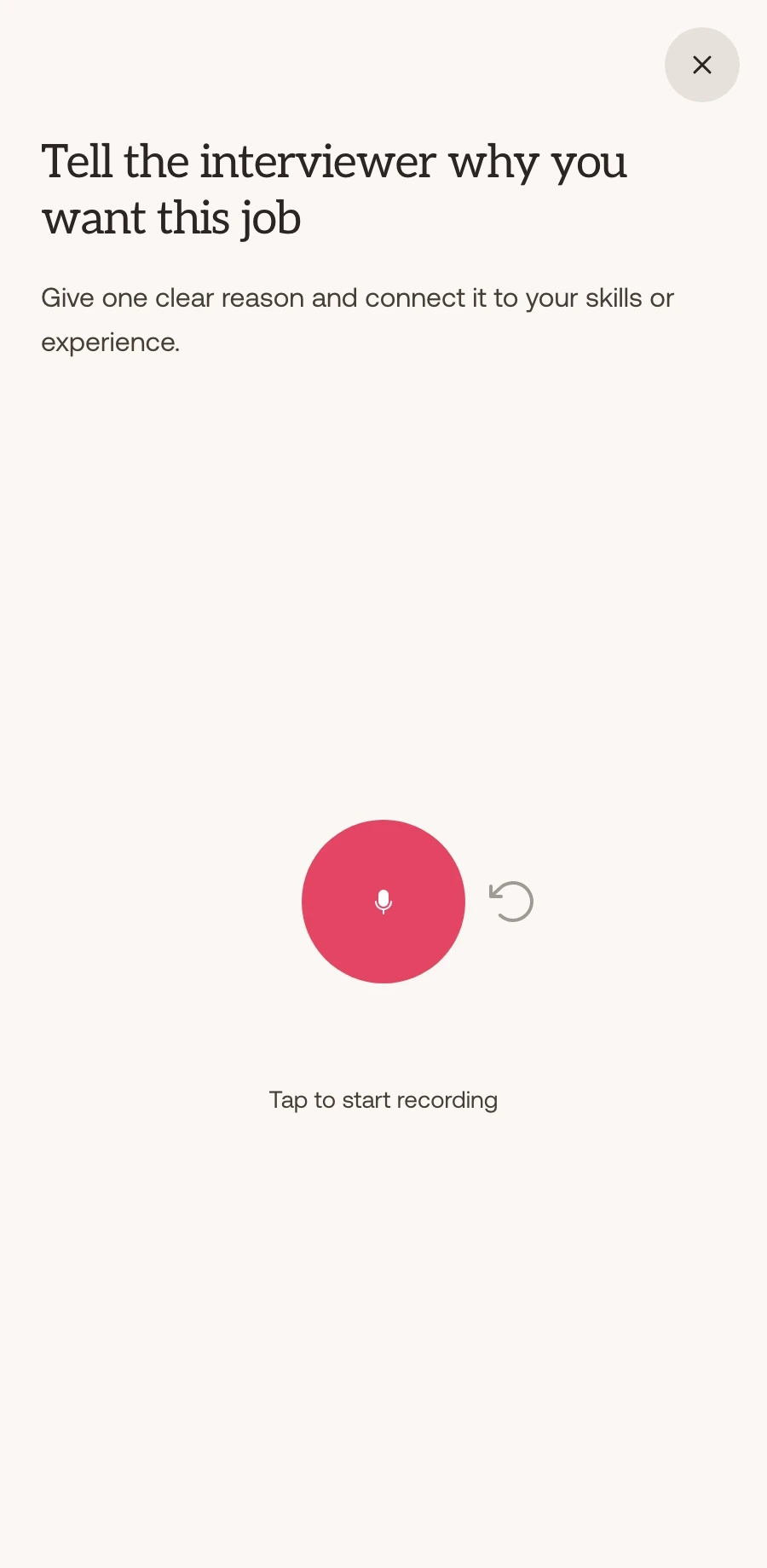
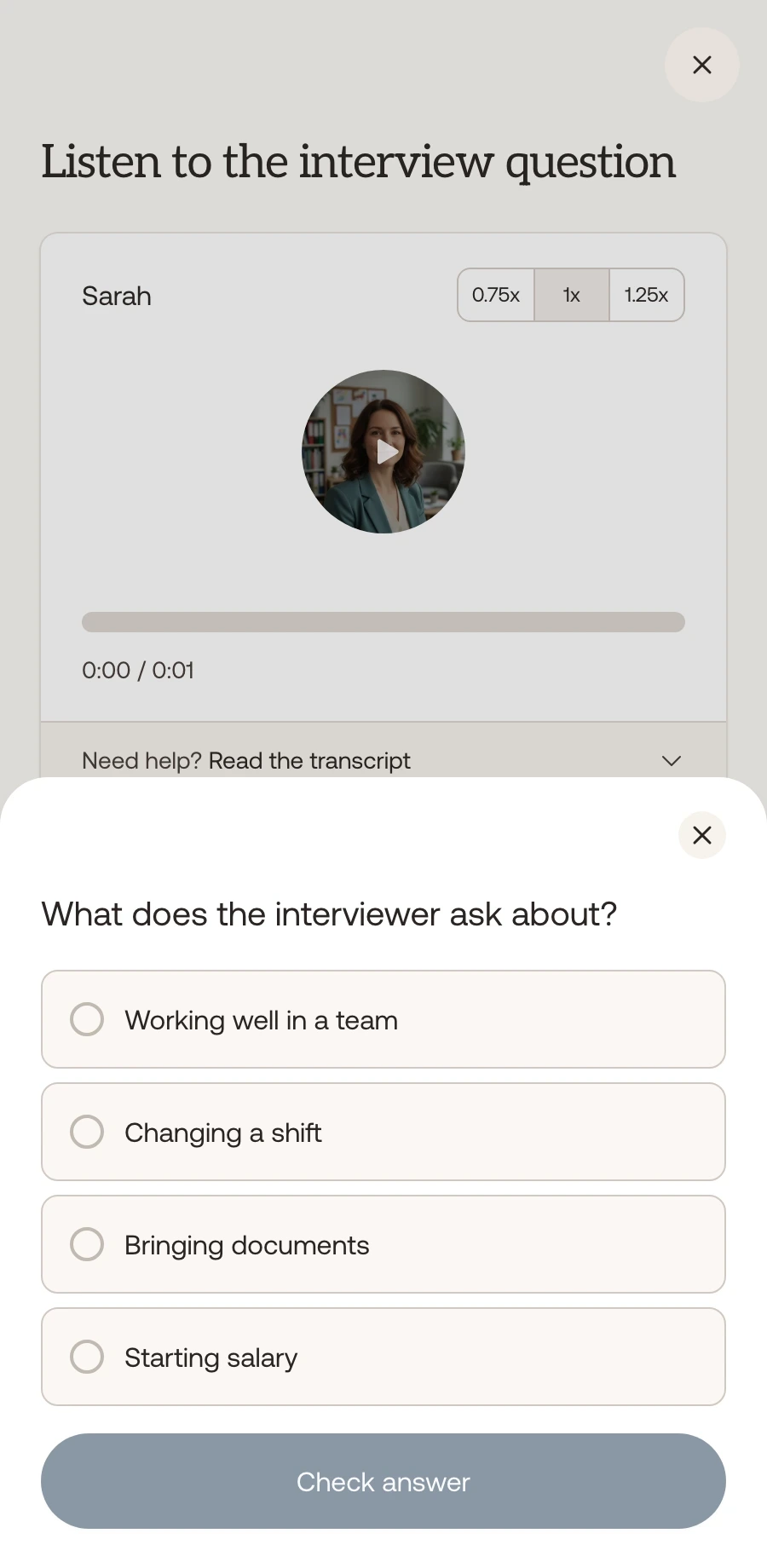
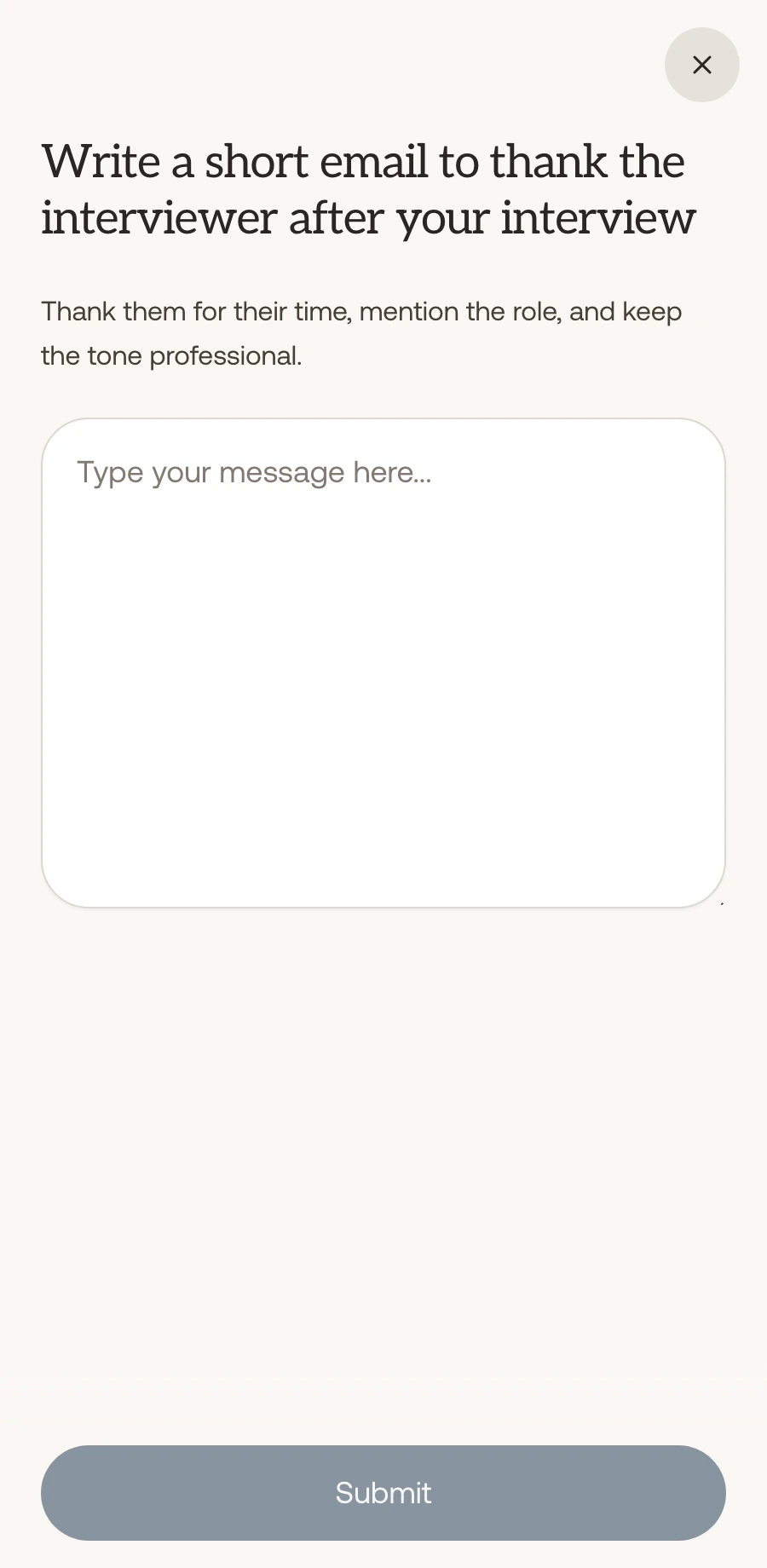
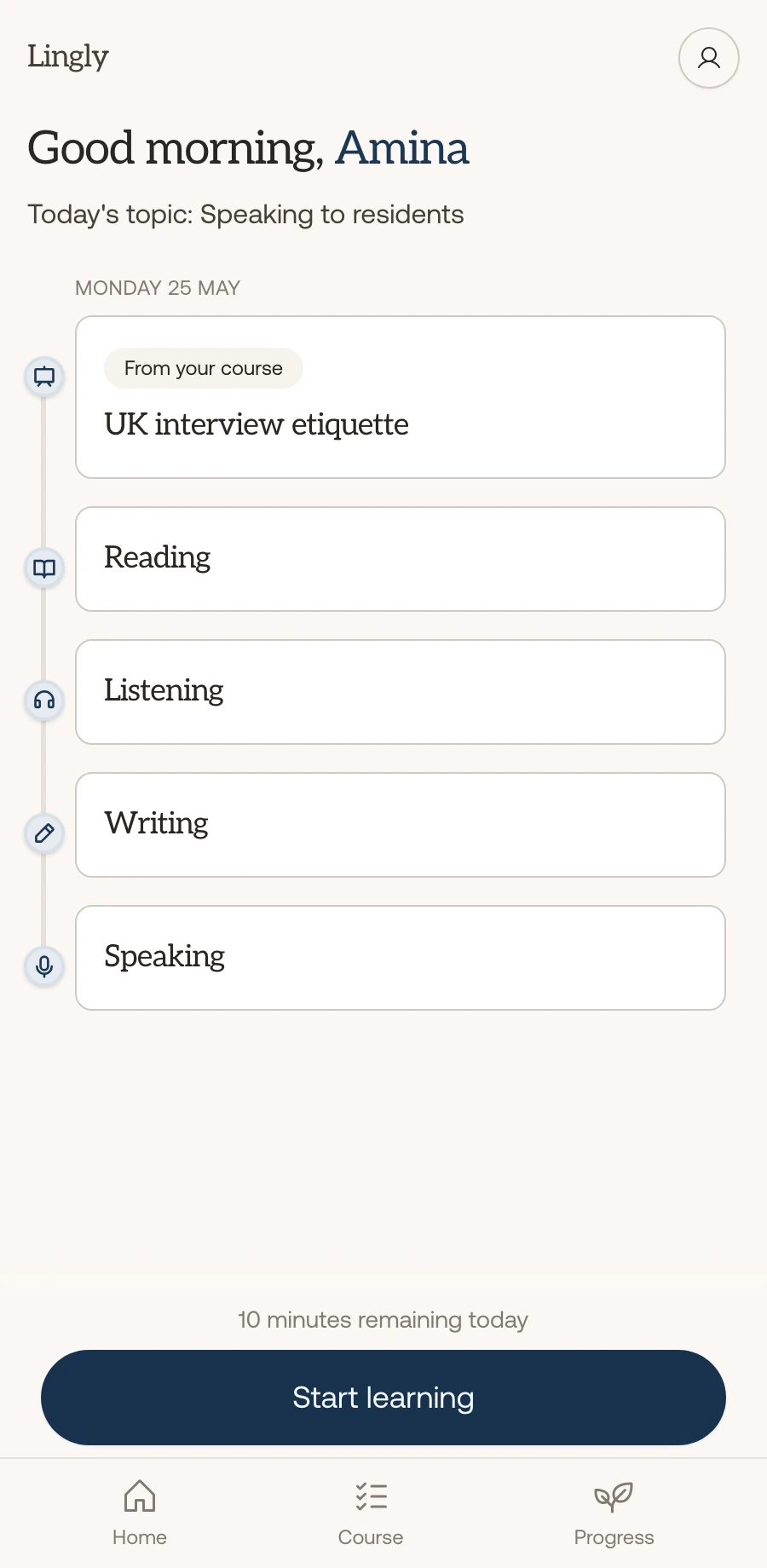
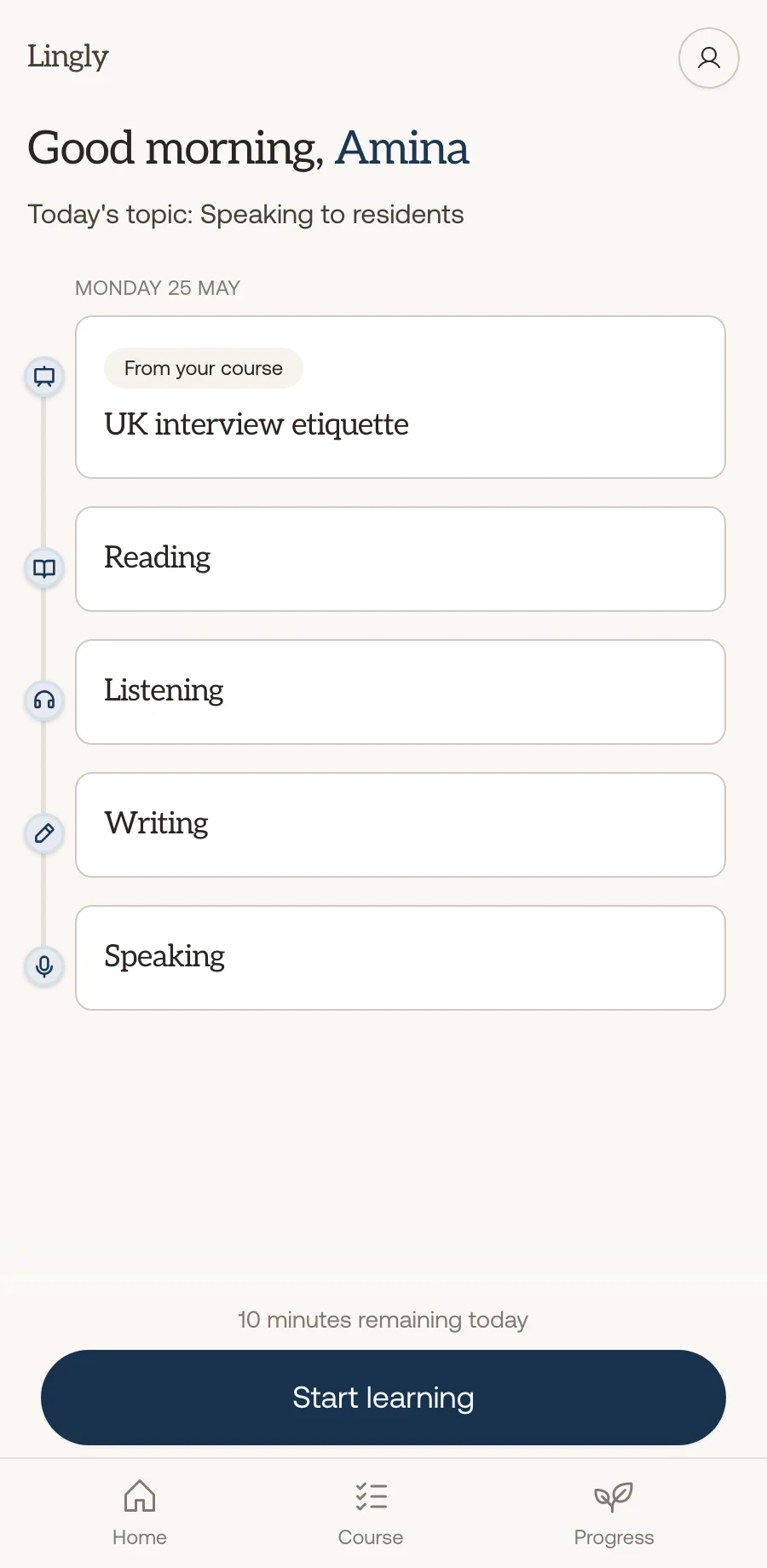
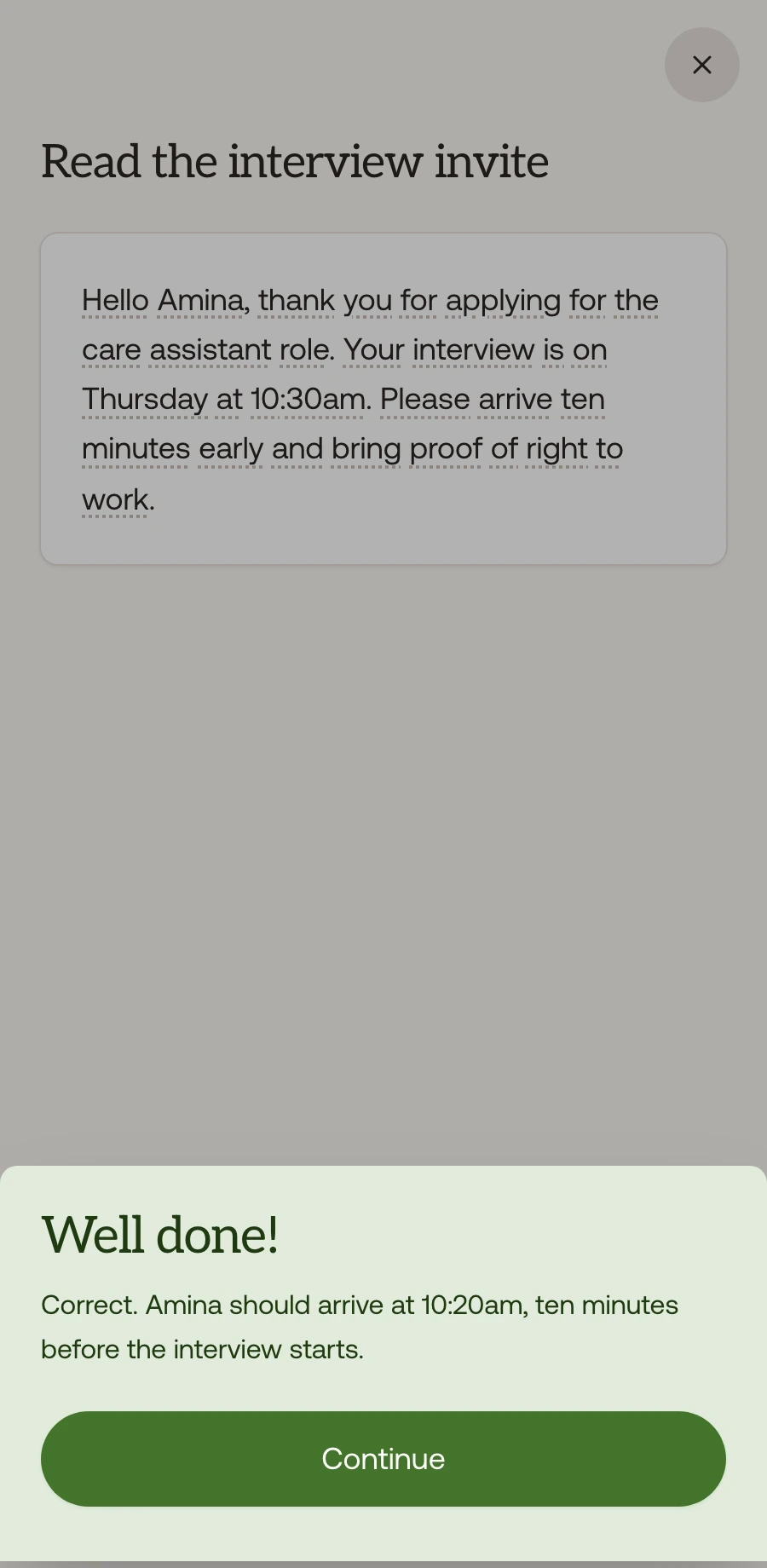
Learners practise the language they need to hear, say, read, and write at work, using exercises built around real workplace tasks.
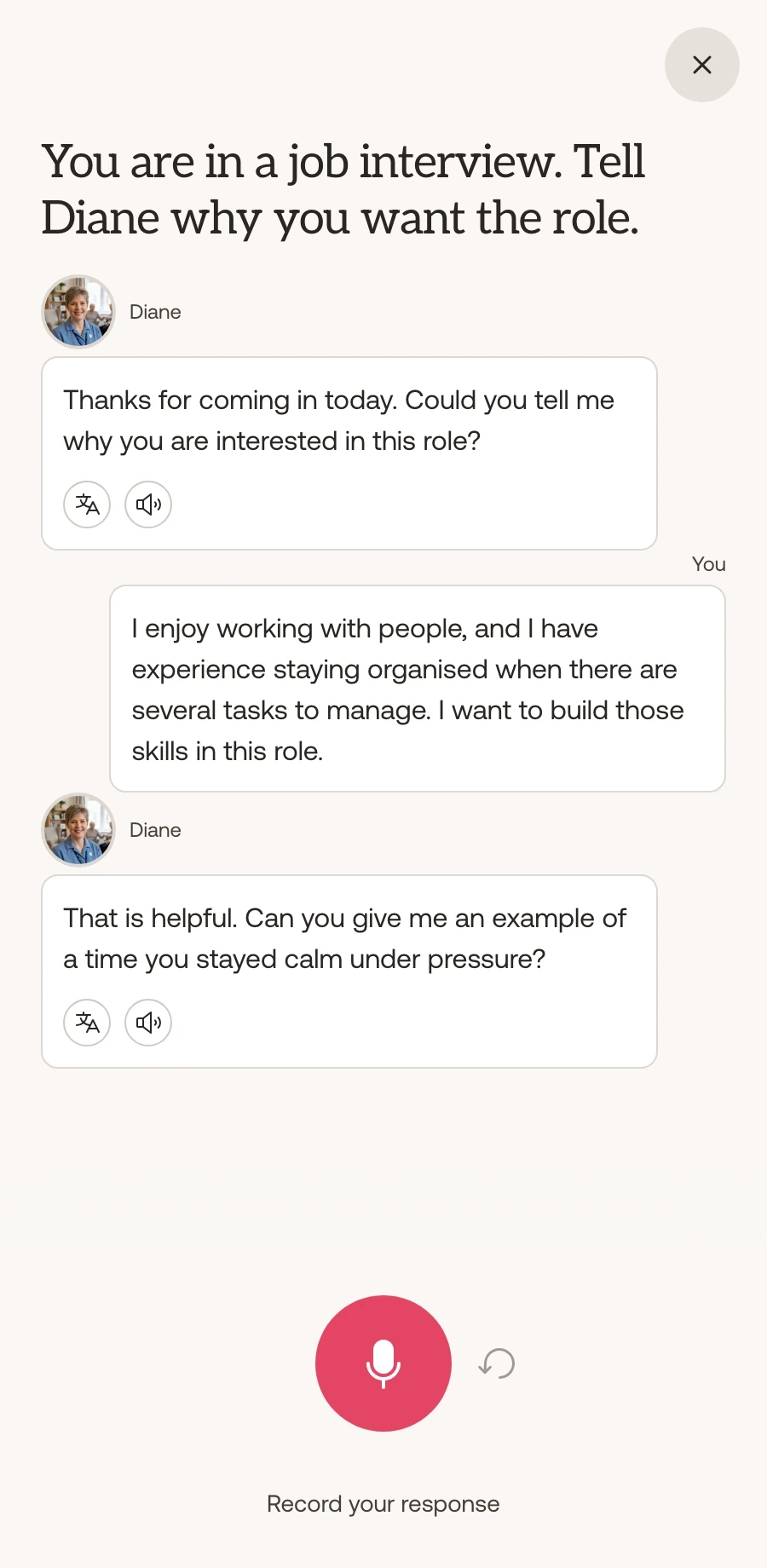
Staff can practise realistic conversations, make mistakes privately, and get feedback on clarity, tone, vocabulary, and confidence.
 English (UK)
  Shqip
Shqip  العربية
  اردو
اردو  Nederlands
  Español
  Français
  Deutsch English (UK) Shqip العربية اردو Nederlands Español Français Deutsch
  Ελληνικά
  हिन्दी
  Italiano
  日本語
日本語  한국어
한국어  Polski
  Português
  Bahasa Malaysia Ελληνικά हिन्दी Italiano 日本語 한국어 Polski Português Bahasa Malaysia
  Română
  Русский
  Türkçe
  Українська
  Tiếng Việt
  ไทย
ไทย  Português
  English (SA) Română Русский Türkçe Українська Tiếng Việt ไทย Português English (SA)
 Explanations and translations help learners understand workplace English without forcing them to learn English only through English.
 Keisha
Hiya love, absolutely chomping at the bit for a cuppa. You fancy one, like?
Lingly helps staff practise the accents, informal phrases, and professional language they are likely to hear at work in the UK.
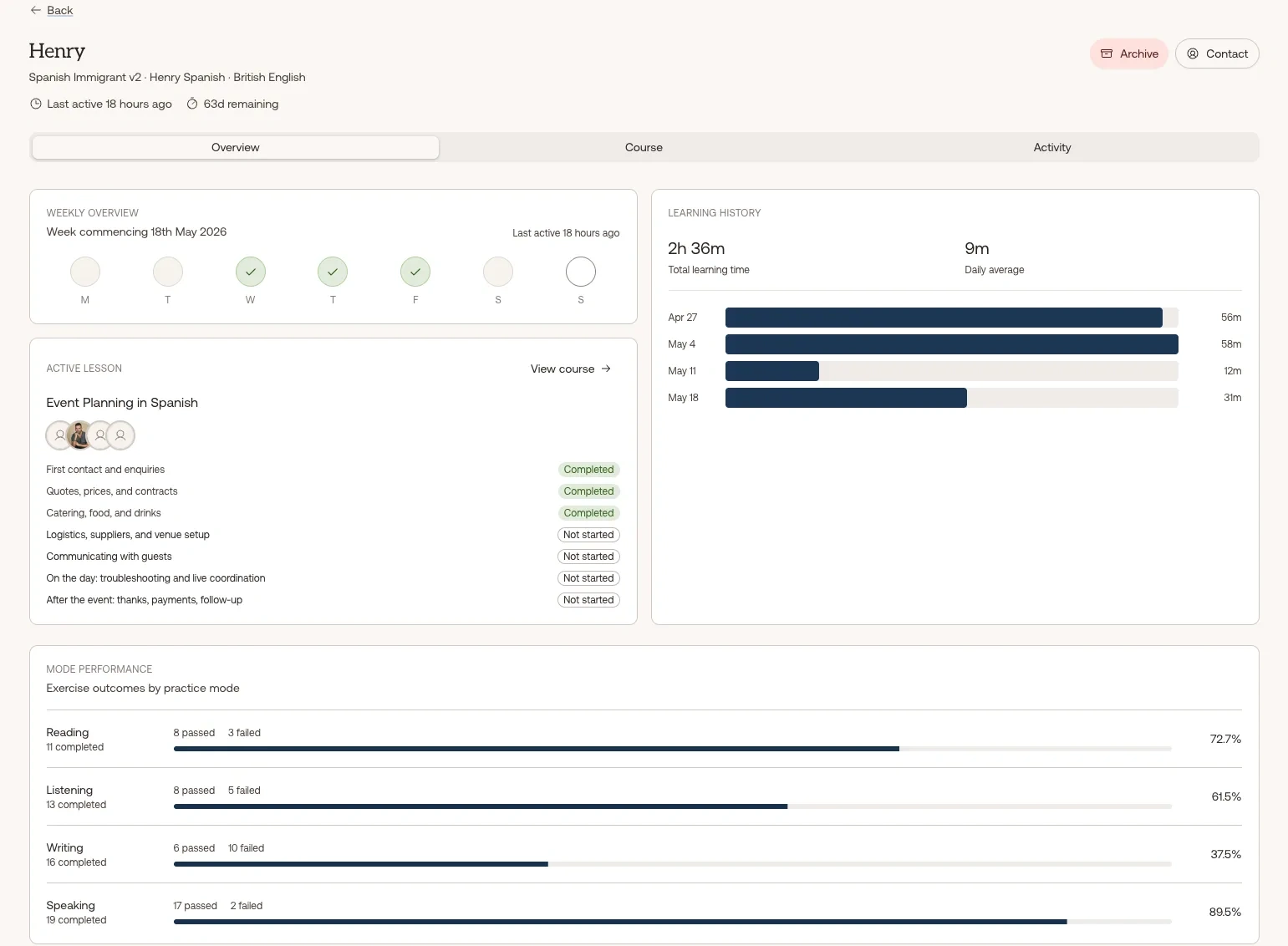
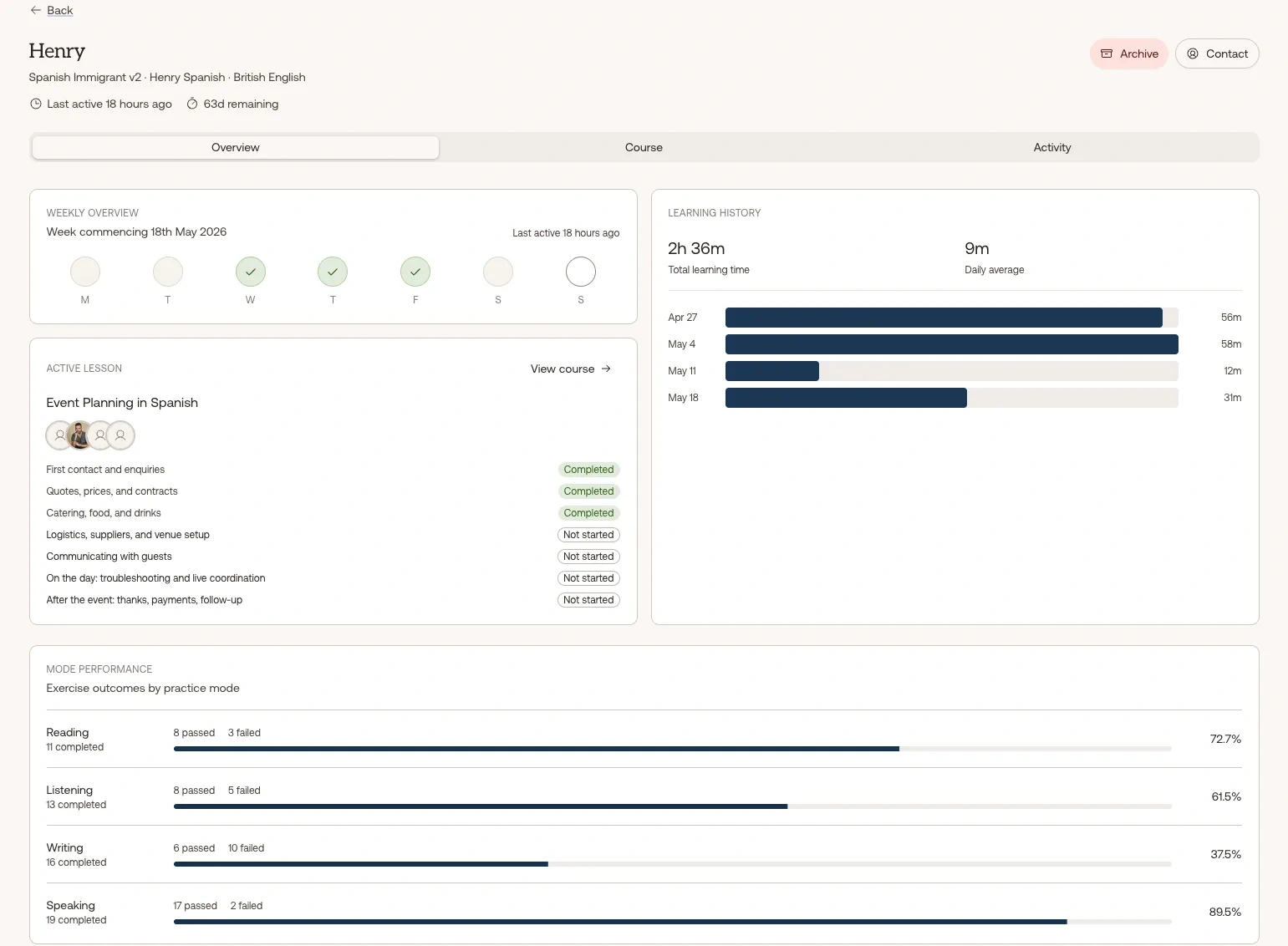
Managers can see who has started, who is active, who is falling behind, and where learners are building confidence over time.
You choose what goes into the course. Lingly builds around your roles, materials, and standards. These are examples of the moments call centres teams typically want staff to practise.
Handling an upset caller
Practise listening, acknowledging the issue, and explaining the next step without sounding defensive.
Putting a customer on hold
Use clear, polite language for holds, transfers, and follow-up actions.
Explaining a policy
Practise simple explanations for refunds, billing, delivery, or account rules.
Working through an accent
Build confidence asking customers to repeat, slow down, or clarify without causing frustration.
Confirming customer details
Practise checking names, account information, addresses, dates, and issue history clearly.
Escalating a complex call
Use concise handover language when a supervisor or specialist needs to take over.
Lingly is not trying to turn staff into perfect English speakers. The aim is more practical: staff understand more of what is said on shift, practise the language of their role, ask for help sooner, and need less manager intervention around recurring communication gaps.
81%
Average enrolment rate across active Lingly programmes
99%
Staff approval recorded in app feedback
11.4K
Average spoken words per active cohort in existing Lingly programmes
5.2 weeks
Average time before seeing results
In five weeks Mustafa did four times the hours he'd have done in a weekly ESOL class and no longer needs Google Translate for our sessions. We'd never have got that from a classroom, no chance.

Ryan Clayton
Manager
It shows me a lot of my mistakes. Now I understand that you should proofread and do it in a professional way. It improves me a lot.

Felicia
Learner
Care notes are clearer now. Managers no longer have to chase staff for missing details because the written updates explain what happened.
Karen
Manager
My other employers just told me to build my confidence, but didn't show me how. This was the first practical training I'd received.

Michael
Learner
One staff member had barely used English since school. Now she speaks confidently in full sentences with residents and their families.

Minu
Manager
Lingly helps me use the right workplace language. I can explain myself more clearly and choose better words when I need to reassure someone.

Dumi
Learner
Start where communication costs the most manager time, then expand when the early results are clear.
Start with the people whose communication affects confidence, safety, service, or manager time.
We turn your organisation’s roles, documents, phrases, and conversations into practical English lessons.
Learners get 24/7 access and can practise in short sessions around their shifts.
Managers can see usage, progress, and where learners are building workplace confidence.
Start with a small pilot, then add learners when you are ready. Each licence includes the course, dashboard, tracking, and support.
£99
per learner per quarter
Volume discounts and PO-based purchasing available
Yes. The course can focus on listening, speaking, call flow, customer tone, and the phrases agents use during real phone support.
Yes. Lingly can use your scripts, call types, policies, customer objections, and required phrases to build relevant practice.
Yes. Lingly works online and is designed for short daily sessions on a phone, tablet, or laptop.
The dashboard shows last active date, daily average practice, course progress, and learner activity so managers can follow up.
Lingly can support mixed levels. The course can begin with simpler listening, speaking, vocabulary, and confidence-building tasks, then adapt as learners progress.
Lingly needs the roles you want to support and examples of the workplace language staff need: common conversations, instructions, safety language, policies, scripts, menus, products, or procedures. The course is then built around that material.
Most teams set a rhythm of 10 to 20 minutes a day. Staff can practise on a phone, tablet, or laptop, so the training can fit around shifts rather than fixed classroom times.
Yes. A common rollout is one site, department, or learner group first. Managers can then review engagement, learner feedback, and whether the course is covering the right workplace situations.
Managers can see who has started, who is active, daily average practice, course progress, and learner activity. The dashboard is there so support does not rely on guesswork.
Yes. Lingly can build practice around the language staff need for safety instructions, policies, escalation, reporting, checks, and role-specific procedures.
Lingly is £99 per learner per quarter. That includes 24/7 access, unlimited practice during the access period, the bespoke course, manager dashboard, progress tracking, and support.
Talk to Lingly about the roles, scenarios, and learners you want to support.